

A jewel with diamond-like brilliance at a fraction of the price?
You may have heard cubic zirconia described as a “fake,” but the truth is that this synthetic gemstone has far more to offer.
If you’ve ever wondered what cubic zirconia really is, why it’s so widely used in silver jewelry, or how to tell when you’re looking at high-quality stones, this article is for you.
Today we’re debunking myths, revealing its true value, and explaining how Salvatore Plata works with AAA-grade cubic zirconia to create vibrant, durable pieces with a soul of their own.
What exactly is cubic zirconia?
Cubic zirconia—also known simply as CZ—is a synthetic gemstone created in a laboratory from zirconium oxide (ZrO₂). It doesn’t exist in nature in the form we know it today; instead, it’s the result of a controlled crystallization process that produces a dense, bright, transparent structure with high light dispersion.
Its development began in the 1970s as an aesthetic alternative to diamonds, but today CZ has earned its own identity in the world of jewelry. Why? Because it combines beauty, durability (up to 8.5 on the Mohs scale), and remarkable brilliance at an accessible price. This has made cubic zirconia a key element in contemporary jewelry collections—not merely as a substitute for natural stones, but as a creative choice in its own right.
How is cubic zirconia made, and what gives it such brilliance?
Cubic zirconia is far from a simple decorative crystal—it’s the result of a highly precise technical process that gives it exceptional optical qualities.
It is created through the controlled crystallization of zirconium oxide (ZrO₂), a process carried out in the laboratory at extremely high temperatures. To stabilize the structure and achieve its perfect cubic form, elements such as yttrium or calcium are added, allowing the formation of a dense, durable, and highly brilliant crystal. Thanks to this process, cubic zirconia offers:
-
High refractive index (between 1.93 and 2.22), which gives it a strong brilliance that can rival—or even surpass—the optical fire of a diamond.
-
Greater dispersion than diamond (0.06 vs. 0.044), resulting in a more colorful and vibrant sparkle.
-
A hardness of 8 to 8.5 on the Mohs scale, making it resistant and suitable for everyday wear.
This process produces stones with a precise optical structure, ideal for cutting and polishing. The result is a uniform, high-quality crystal ready to be transformed into a jewel.
Cubic zirconia or zircon? No, they’re not the same
It’s easy to confuse the two, but zircon and cubic zirconia are completely different materials, both in origin and in their properties. Understanding this distinction is key to avoiding misunderstandings.
While zircon is a natural gemstone, cubic zirconia is a synthetic gem—but that doesn’t make it less valuable. Its structure is engineered with precision to deliver maximum brilliance and durability.
Below is a clear comparative table highlighting their main differences:
| Característica | Circonita (CZ) | Zircón |
|---|---|---|
| Origen | Sintético (laboratorio) | Natural (mineral extraído de la Tierra) |
| Composición química | Óxido de circonio (ZrO₂) | Silicato de circonio (ZrSiO₄) |
| Dureza (escala Mohs) | 8 – 8,5 | 6 – 7,5 |
| Brillo y fuego óptico | Muy alto, dispersión incluso superior al diamante | Más bajo y menos uniforme |
| Precio | Más económico | Variable, puede ser elevado según calidad |
| Usos en joyería | Muy extendido en joyería contemporánea | Menos común, más asociado a colecciones peculiares |
Color Variety
Cubic zirconia is a true strategic chameleon within the gemstone portfolio. Thanks to the ability to introduce different coloring agents during its lab growth, it can reproduce—with almost audacious precision—a color palette ranging from classic tones to the boldest shades.
Deep sapphire blues, highly saturated emerald greens, soft pinks, sunny yellows, sophisticated violets, or even whites with varying purity levels… cubic zirconia allows virtually unlimited control over color. This gives design teams creative freedom that would be nearly impossible with natural gemstones, where color variation depends on the whims of geology.
For a brand like Salvatore Plata, this translates into a high-value asset:
stable, reproducible, vibrant color perfectly aligned with seasonal fashion trends, season after season. In other words, zero improvisation and maximum visual consistency across the collection.
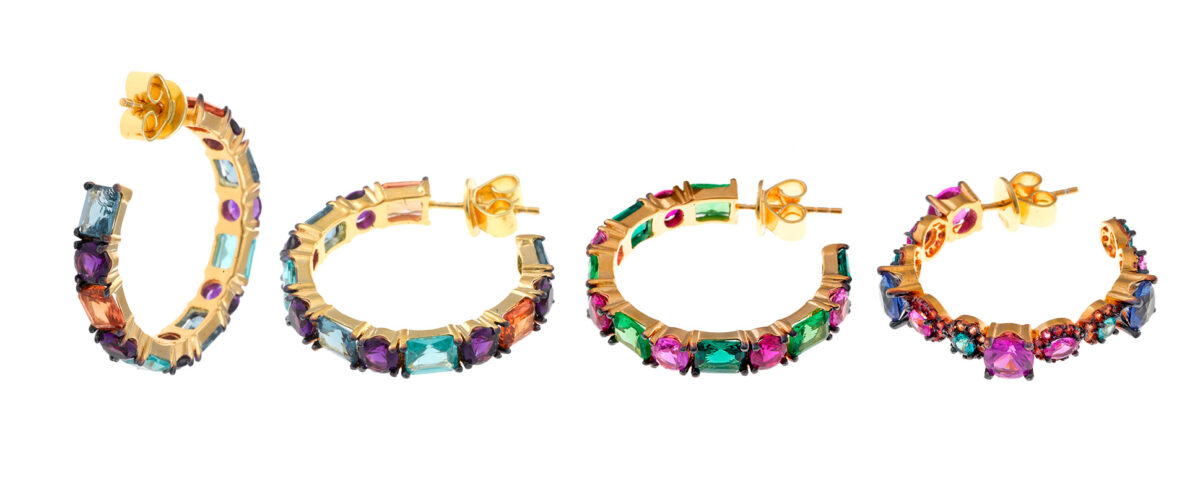
During the manufacturing process, cubic zirconia can be combined with different chemical elements that alter its hue. This allows for solid colors such as sapphire blue, emerald green, or ruby red, as well as special effects like rainbow, ice cuts, opalescent tones, or even natural stone imitations like coral or turquoise.
Thanks to this technical control over color, Salvatore Plata collections can reflect the chromatic trends of each season, creating jewelry with personality, coherence, and visual richness.
Freedom in Cuts
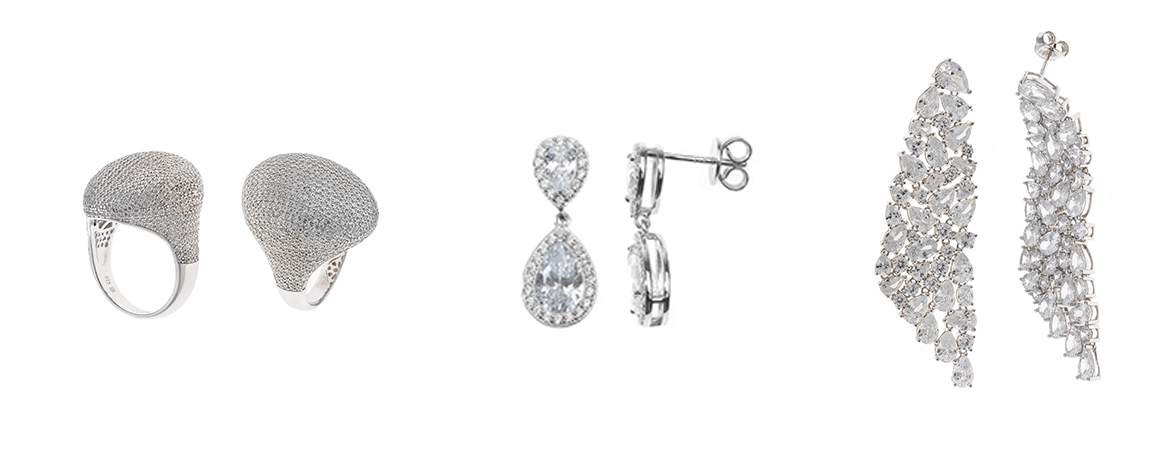
Beyond color, cubic zirconia can be cut into almost any gemstone shape: round brilliant, oval, pear, marquise, heart, princess, baguette, cushion, trillion… and even fantasy cuts or micro-faceted pavé styles.
This adaptability allows designers to play with volume, movement, and light within a single piece. At Salvatore Plata, we often combine different cuts in the same piece to achieve that dynamic, multi-faceted visual effect that is so characteristic of our collections.
Are there different qualities of cubic zirconia?
Yes—and knowing them is key to understanding why not all cubic zirconia stones are created equal. Although they may appear similar at first glance, a stone’s quality directly affects its brilliance, transparency, durability, and how it ages over time. The quality of cubic zirconia is determined mainly by three factors:
Optical Purity
High-end cubic zirconia is free of bubbles, impurities, or inclusions. The best—such as AAA or AAAAA grade stones—offer flawless transparency and a look very close to that of a natural gemstone.
Cut and Polish
A quality cubic zirconia has precise cuts with well-calibrated facets that maximize brilliance and light dispersion. This not only enhances aesthetics but also increases the stone’s durability.
Wear Resistance
Quality is also reflected in how well the stone maintains its shine with daily wear, provided it is properly set and protected.
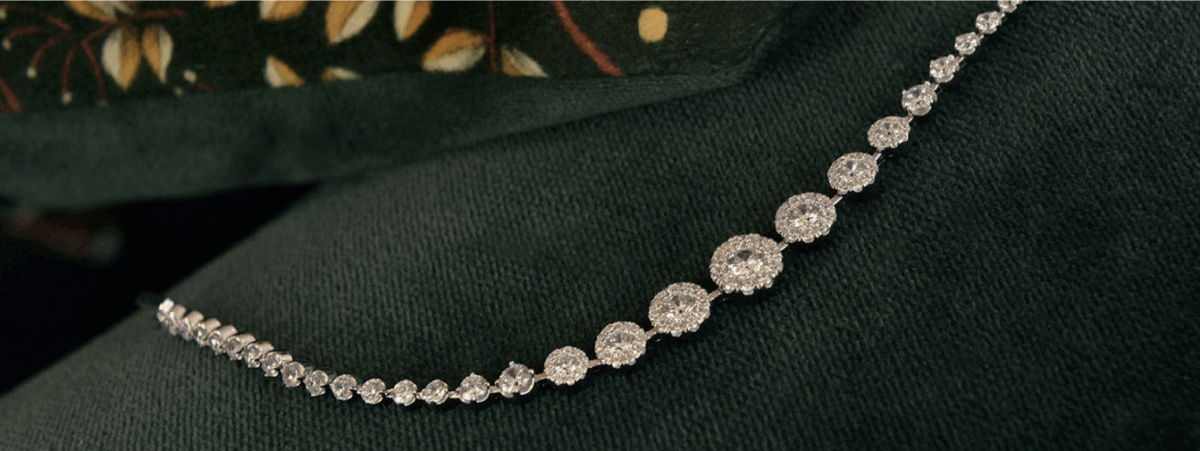
In our collections—especially in lines like Wedding—we use AAA-grade cubic zirconia, selected for their clarity, brilliance, and superior finish. This choice is no accident: we always aim for each piece to have impeccable presence, and that starts with selecting the finest materials.
What’s the Difference Between Cubic Zirconia and Lab-Grown Gemstones?
Although both are created in a laboratory, cubic zirconia and lab-grown gemstones are not the same. The difference lies in their origin, composition, and role within the world of jewelry.
Cubic zirconia (CZ) is a synthetic crystal with no exact natural equivalent. As mentioned earlier, it is manufactured from zirconium oxide (ZrO₂) through a controlled crystallization process that gives it great hardness, high brilliance, and a clean, uniform appearance. It is prized for its optical properties, color versatility, and excellent value for money.
Lab-grown gemstones, on the other hand, are exact replicas—chemically, physically, and optically—of natural stones, such as diamonds, emeralds, or rubies. The only difference is their origin: instead of forming underground over millions of years, they are generated under controlled laboratory conditions, but with the same atomic structure as their natural counterparts.
At Salvatore Plata, while most of our jewelry is crafted with AAA-grade cubic zirconia for its creative potential and accessibility, we also offer select collections made with lab-grown gemstones for those seeking an extra touch of exclusivity, as seen in our CROWN collection.

Durability and Settings of Cubic Zirconia: The Keys to Long-Lasting Jewelry
The beauty of a cubic zirconia doesn’t depend solely on its quality—it also depends on how it is set. A well-crafted setting protects the stone, enhances its brilliance, and ensures that the jewelry remains in perfect condition over time.
Is Cubic Zirconia Durable?
With a hardness of 8 to 8.5 on the Mohs scale, cubic zirconia is strong enough for everyday jewelry such as rings, pendants, and earrings. It doesn’t scratch easily and withstands daily wear—as long as it is properly set.
Most Common Cubic Zirconia Settings
Professional jewelry employs different CZ setting techniques depending on the piece and design. The most common are:
-
Prong Setting: Allows maximum light to pass through, enhancing brilliance—ideal for solitaires or statement pieces.
-
Bezel Setting: Encircles the stone completely, offering greater protection; commonly used in modern or everyday designs.
-
Invisible Setting: Stones are secured without visible metal, creating a seamless “carpet of light” effect.
-
Pavé Setting: Small CZ stones placed very close together, held with tiny prongs; often used in rings, bracelets, or earrings with a sparkling surface.
-
Micro-Setting: A precise technique in which micro-cubic zirconia stones (smaller than 1 mm) are set manually under a microscope. This is used in high jewelry designs to create a continuous luminous effect.
-
Carré Setting: Features clean lines and sharp angles, highly valued for geometric elegance and timeless modernity. In this setting, a square or rectangular stone is secured with four prongs or bezels—one at each corner—enhancing the purity of the lines and allowing light to enter directly, producing crisp, sophisticated sparkle.
At Salvatore Plata, every piece is designed and produced with durability in mind. We select the most suitable setting for each design and, in many pieces, apply micro-setting to achieve the distinctive “luminous tapestry” effect seen in collections such as ALTAI, which we invite you to explore here.

How to Care for Cubic Zirconia Jewelry to Keep It Shining Like New
Although cubic zirconia is durable and resistant, proper maintenance can make a big difference in its long-term appearance. By following some basic care tips, you can preserve its brilliance and prevent premature wear.
Regular Cleaning
To remove traces of oils, dust, or cosmetic products, simply wipe your jewelry with a soft, dry cloth after each use. Occasionally, you can soak it for a few minutes in lukewarm water with mild soap and gently brush it with a soft-bristled brush.
Avoid Harsh Products
Do not expose cubic zirconia to perfumes, hairsprays, cleaning products, or chlorinated pools. While they are resilient, these substances can dull their shine over time.
Proper Storage
Store your jewelry separately in individual cases or pouches to prevent scratches from contact with other pieces. This protects both the stones and the silver.
Remove During Intense Physical Activities
Taking off your jewelry before exercising, cleaning, or sleeping is a good habit. This helps avoid knocks, snags, or accidental loss.
If your jewelry begins to lose its original look despite basic maintenance, it may need professional servicing. At Salvatore Plata, we offer specialized workshop services to restore their initial beauty and finish.
Discover How Cubic Zirconia Shapes the Style of Salvatore Plata
Now that you better understand what cubic zirconia is, how it’s made, and why it’s increasingly valued in jewelry, you can appreciate its creative potential. If you’re looking for cubic zirconia jewelry that combines design, color, a variety of cuts, and high-quality settings, we invite you to explore our collections.
Cubic zirconia is not merely an imitation—it’s a creative and technical choice that allows style to shine without compromising quality. At Salvatore Plata, we embrace this material to offer pieces that sparkle with their own personality.
Explore the full catalog [here] and get inspired by the brilliance and versatility of our designs.