


There are details that make a difference, even if they are not immediately noticeable..
You may have heard about rhodium plating when choosing a ring or asking about the finish of a piece of jewelry. You may also have read questions like, “Does it get ugly?”, “Is it worth it?”, or “How much does it cost to reapply it?” This is normal, because when it comes to jewelry, we want to understand exactly what we are wearing.
Rhodium plating is one of those concepts that often comes up in the world of jewelry, but is rarely explained clearly. It’s not just an aesthetic matter, nor simply a finish. Behind it lies technique, material, and a specific function that directly influences how a piece ages and how it behaves in everyday wear.
Before making a decision, it’s worth understanding what it really means for a piece of jewelry to have a layer of rhodium, what it adds, and what it implies over time. Because when you know what lies behind the shine, you choose with a different perspective.
What Rhodium Plating Is and Why It’s Used in Jewelry
Rhodium is a precious metal belonging to the platinum group and one of the rarest metals in the world. In jewelry, it is not used in solid form, but as a coating.
When we talk about rhodium plating, we refer to the application of a layer of rhodium over the surface of a piece of jewelry, generally made of 925 silver. This layer is applied through an electrochemical process that allows the piece to be coated evenly.
Its function is to improve the finish and the performance of the jewelry over time. In the case of silver, rhodium plating acts as a protective barrier that helps prevent oxidation and natural tarnish, while also providing a more intense shine and a brighter white tone.
What Rhodium Plating Does for a Piece of Jewelry
Beyond its function as a finish, rhodium plating directly affects how a piece of jewelry looks and behaves in use.
A piece with this treatment has a sharper, more uniform shine, with a brighter and more defined surface. The white tone appears clearer and visually cleaner, enhancing the design and details of the piece.
Additionally, this surface protection helps the jewelry maintain its appearance against constant contact. In pieces worn daily (like rings or bracelets), constant contact with skin, clothing, or hard surfaces can cause micro-scratches. Rhodium provides greater resistance against this everyday wear.
It also helps maintain a more stable appearance over time, especially in environments where humidity, sweat, or temperature changes are frequent. This doesn’t mean the jewelry is indestructible, but it is better prepared for regular use.
Does Rhodium Plating Get Ugly Over Time?
This is one of the most common questions: Does it lose shine? Does it deteriorate? Does it end up looking dull?
Rhodium plating does not suddenly get damaged. What can happen with daily use is gradual wear, especially on pieces like rings that are in constant contact with surfaces and friction. On earrings or necklaces, where contact is minimal, the finish tends to last longer.
Factors like frequent contact with chemicals such as perfumes, sweat, or certain daily habits also affect its longevity. This is not a defect, but a normal behavior for any surface finish.
Most importantly, if over time the piece loses intensity or shine, it can always be refreshed in a workshop. Proper refurbishment restores the original finish and appearance, leaving the jewelry practically as it was the first day.
How Long Does Rhodium Plating Last?
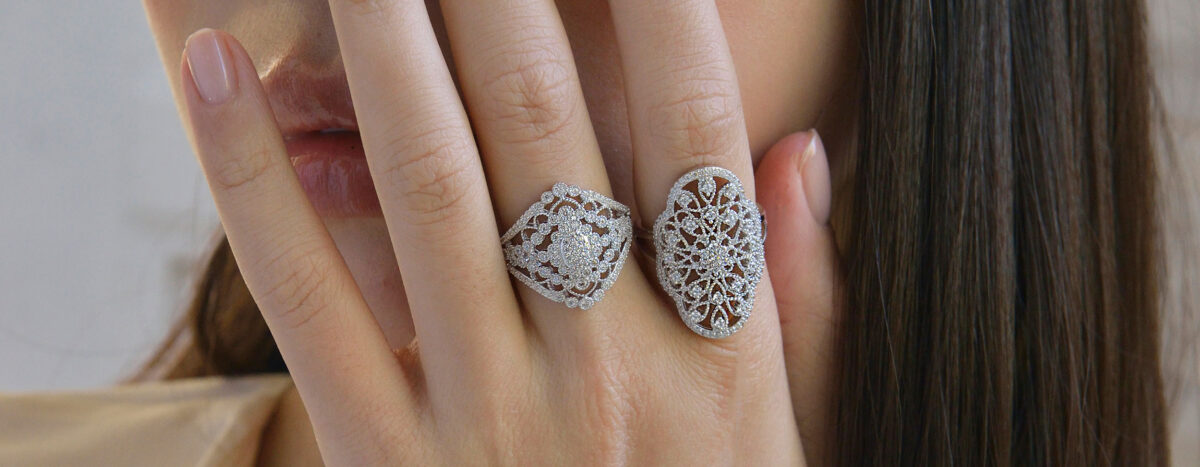
Sterling silver jewelry with gold plating from the WEDDING Collection
The durability of rhodium plating depends not only on time but also on concrete variables such as the type of piece, areas of contact, intensity of use, and quality of the applied finish.
A ring that is in constant contact with hard surfaces is not the same as earrings, which experience very little friction and can remain practically unchanged for years.
The thickness of the application also matters. A properly deposited layer of rhodium with the correct microns provides greater resistance and stability than a more superficial plating.
Under normal conditions, the finish can last a long time. When the piece is worn daily, it may require renewal over the years. In any case, this is considered technical maintenance, not structural deterioration of the jewelry.
The Cost of Rhodium Plating on Silver Jewelry
The cost of rhodium plating can vary depending on several factors. Not all pieces require the same preparation or the same amount of material. The size of the jewelry, its condition, and the need for polishing before applying the new finish directly influence the final cost.
In Spain, the approximate range for renewing the rhodium plating of a simple ring is usually between 20 and 60 euros. However, larger pieces, those with complex textures, or those requiring additional preparation may have a higher cost.
It is also worth noting that rhodium is one of the precious metals with the most price fluctuations in the international market. Its scarcity and market value influence the cost of the treatment, which explains why it is not just an aesthetic “touch-up,” but a technical process that requires valuable material and specialized work.
How to Care for Rhodium-Plated Jewelry
Although rhodium plating improves the performance of a piece in daily wear, proper daily care is still important to keep the finish in the best condition.
A simple step is to avoid direct contact with perfumes, creams, or cleaning products, as they can affect the surface over time. It is also advisable to remove jewelry before activities that involve impacts or strong friction.
When storing jewelry, ideally keep each piece separate, in its case or in an individual bag, to prevent rubbing against other pieces that could cause micro-scratches.
For cleaning, a soft, dry cloth is enough to maintain shine. There is no need to use abrasive products or aggressive cleaning methods.
With these basic precautions, the finish can stay in optimal condition for longer, and the jewelry will preserve its original appearance.
Rhodium Plating in Salvatore Plata Jewelry
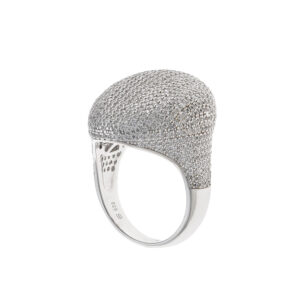
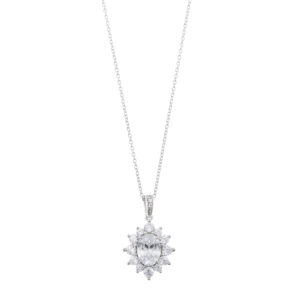
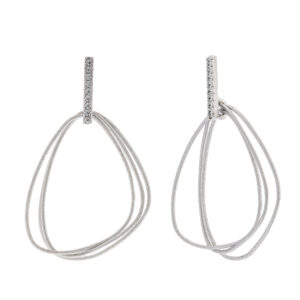
At Salvatore Plata, rhodium plating is part of the final finish of many of our sterling silver pieces. It is not just an aesthetic choice, but a technical decision designed to optimize the jewelry’s performance over time.
This treatment acts as a protective barrier against oxygen and humidity, helping reduce the natural tarnish of silver and maintaining a more stable and luminous appearance. It also provides a sharper shine and a brighter white tone that enhances the design details.
But the finish is only part of the process. Each sterling silver piece carries our responsibility hallmark registered with the Oficina Española de Patentes y Marcas (OMPM) under number 2.095.446(8), as well as the official guarantee mark from the precious metals laboratory of the Instituto Tecnológico Metalmecánico (AIDIMME).
This guarantees that every item is made of genuine sterling silver. In addition, in collaboration with AIDIMME, we verify the absence of toxic metals in our products, ensuring that only safe pieces for health and everyday use are marketed.
In jewelry, the finish matters. But the guarantee of the material is essential.
Frequently Asked Questions About Rhodium Plating
Although rhodium plating is a common jewelry finish, specific questions often arise before buying or renewing a piece. Here are some of the most frequent questions:
-
Is rhodium plating permanent?
No es un acabado permanente. Se trata de un recubrimiento superficial que puede mantenerse en buen estado durante un largo periodo, pero que, con el uso intensivo, puede requerir renovación. La joya no pierde su valor ni su estructura, simplemente puede necesitar un reacondicionamiento estético.
-
Can rhodium plating be applied multiple times to the same piece?
Sí. El baño de rodio puede renovarse cuando sea necesario. Antes de volverlo a aplicar, la pieza suele pulirse y prepararse adecuadamente para asegurar un acabado uniforme.
-
Can rhodium cause allergies?
El rodio es un metal hipoalergénico y, precisamente por eso, se utiliza como acabado en joyería.
-
Can rhodium plating be applied to any silver jewelry?
En la mayoría de piezas de plata es posible aplicarlo, siempre que la estructura lo permita y la joya esté en condiciones adecuadas. En piezas con ciertos acabados específicos o texturas muy concretas, puede ser necesario valorar previamente la viabilidad del tratamiento.
-
Does rhodium plating change the weight or thickness of the jewelry?
No de forma perceptible. La capa aplicada es extremadamente fina y no altera el peso ni la estructura de la pieza. Su función es superficial, sin cambiar la forma ni el volumen original.
Understanding the Finish Means Understanding the Jewelry
Knowing what rhodium plating is and how it affects a piece allows you to appreciate not only its shine but also the technical work behind each design.
At Salvatore Plata, we have been developing our own collections for over 30 years, designed in Spain and made in sterling silver under strict quality and control standards. Each finish is part of a process designed to offer pieces that maintain their presence and character over time.
If you want to explore our collections and see the different finishes available, you can check the full catalog of Salvatore Plata pieces. If you prefer to see them in person, we invite you to use our store locator to find the nearest shop.
Because understanding a piece of jewelry is also a way to make a better choice 🤍