

“In jewellery, the shop window doesn’t sell on its own, but it does decide who comes in to buy.”
Why do some shop windows make people stop, while others go completely unnoticed?
For a jewellery store, that difference is everything. The customer decides in just a few seconds whether to approach or keep walking, and in that moment the shop window becomes the main point of attraction.
The challenge is even greater when working with jewellery. These are small, delicate pieces that need light, space and the right context to stand out. Too much product can overwhelm. Poor lighting can make them disappear. And a shop window without intention simply becomes invisible.
Creating an original jewellery shop window today is not just an aesthetic matter, but a key tool for attracting attention, sparking interest and standing out from other stores.
Why invest in original jewellery shop windows
A shop window is, in many cases, the first point of contact with the customer. And it’s what makes the difference between stopping at the store or walking past.
In fact, in retail it is estimated that between 60% and 80% of decisions to enter a store happen at the point of sale itself, directly influenced by what is happening in the shop window.
In jewellery, this impact is even more decisive. Pieces need context to stand out, and the way they are presented directly influences how they are perceived: more valuable, more current or more desirable.
Investing in an original shop window attracts attention, reinforces brand image and differentiates the store from competitors. It also has a direct effect on foot traffic, increasing the chances that initial interest turns into a visit… and into a sale.
What truly makes a jewellery shop window original
Originality in a jewellery shop window does not depend on adding more elements, but on knowing what to show and how to show it.
Unlike other sectors, where products can occupy more space and compete visually, in jewellery each piece needs an environment that supports it without stealing the spotlight. Therefore, an original shop window is not the most cluttered or the most complex, but the one that manages to direct the gaze with intention.
One of the most decisive factors is focus. Selecting few pieces and giving them space allows each one to breathe and stand out. When everything competes at the same level, nothing manages to capture attention.
Lighting is another key element. Well-directed light can highlight volumes, brilliance and details that would otherwise go unnoticed. In jewellery, light is not an accessory — it is part of the shop window design.
Visual coherence also matters. An original shop window usually responds to a clear idea — whether a concept, a season or a specific aesthetic. When all elements follow that line, the result is cleaner, more attractive and easier to understand for the observer.
Finally, there is the ability to simplify. In many cases, the difference lies not in adding, but in removing. Reducing elements, organising the composition and leaving space allows the jewel to stand out and the shop window to fulfil its main purpose: attracting attention without creating noise.
Key aspects to consider before designing an original jewellery shop window
Before thinking about design, it is worth being clear about some factors that condition the result. A shop window may be visually attractive, but if it does not respond to its context, it will hardly fulfil its function.
The season and time of year.
It is not the same to design a shop window in spring as in the middle of the Christmas campaign. The time of year shapes not only the aesthetics, but also the type of message to be conveyed. Adapting to the context helps to connect better with the observer.
The type of jewellery and brand style.
A shop window should reflect what will be found inside the store. There is no point in creating a minimalist aesthetic if the pieces are bold, or vice versa. Coherence is key for the customer to understand the proposal at a glance.
The number of pieces
En joyería, menos suele ser más. Seleccionar bien qué se muestra permite crear jerarquías visuales y dirigir la atención hacia lo que realmente interesa destacar. Cuando hay demasiados elementos, el conjunto pierde fuerza.
The size of the shop window.
The space directly conditions the composition. In small shop windows, every decision counts and greater precision is needed. In larger spaces, there is room to play with volumes, heights and visual paths.
The available budget.
Major investments are not always necessary to achieve an original result. Often, creativity and intelligent use of resources make the difference. Defining a budget is key to assessing the scope of the proposal.
Which pieces to highlight.
New arrivals, best sellers or distinctive designs can become the centrepiece of the shop window. Choosing jewellery with intention allows for a clearer and more effective proposal.
When to refresh the shop window in a jewellery store
Keeping a shop window up to date does not depend solely on creativity, but also on the timing of the change.
In jewellery, there are certain times of year that serve as key moments to refresh the shop window — not only because they increase customer interest, but because they allow connection with especially relevant campaigns and dates.
Key commercial campaigns
Some moments of the year concentrate higher volumes of traffic and purchasing, making them clear opportunities to update the shop window:
- Christmas
- Winter sales
- Mother’s Day
- Summer sales
- Black Friday
During these dates, the shop window must not only attract but also clearly communicate the commercial offer.
Seasonal launches
Collection changes are another major opportunity to refresh the shop window and maintain interest:
- Spring – Summer
- Autumn – Winter
These moments allow for the introduction of new arrivals and the adaptation of the shop window’s aesthetic to the season, both in colour and concept.
Local festivities and cultural context
Beyond the general calendar, each location offers its own opportunities. Events such as Las Fallas in Valencia or the Feria de Abril in Seville allow connection with the local environment and audience, creating a more relevant and relatable shop window.
Coherence between the shop window and the interior space in a jewellery store
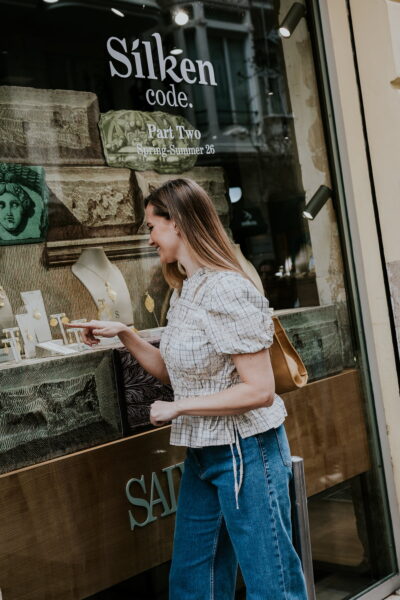
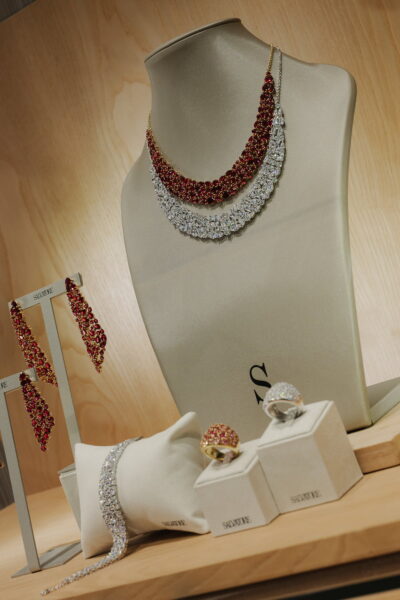
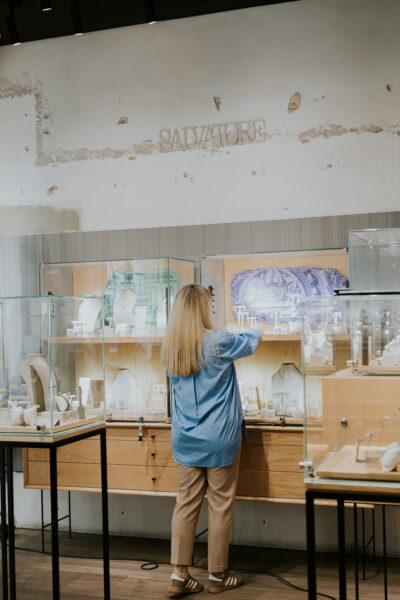
The shop window should not be understood as an isolated element, but as an extension of what happens inside the store.
When there is continuity between the shop window and the interior — in the decoration, display cases, materials or other small details — the experience feels more considered and coherent. The customer is not only attracted from outside, but finds the same visual language inside that invited them to enter.
This can be applied in many ways: adapting the aesthetic of display cases, incorporating thematic elements in the space, or working on details such as packaging, staff uniforms or visual supports and digital screens.
It is not about transforming the entire store with each shop window change, but about introducing small adjustments that reinforce the same idea. When everything responds to the same concept, brand perception is strengthened and the experience becomes far more complete.
Frequently asked questions about original jewellery shop windows
When designing a jewelry store window display, very specific questions arise that go beyond just the design itself. Below, we answer some of the most common ones.
-
How often should a shop window be changed?
As a general guideline, many jewellery stores update their shop window every 3 to 6 weeks, adapting it to campaigns, seasons or new products. Beyond major changes, introducing small variations more frequently helps maintain interest and prevents the shop window from being perceived as static.
-
How much can an original jewellery shop window cost?
The cost can vary greatly depending on the approach and level of intervention. A basic change can be made with minimal investment. A themed shop window typically ranges between €100 and €500. For more elaborate proposals, the budget can exceed €1,000, especially if custom production is involved. In many cases, the difference lies not in the budget, but in the idea and how it is executed.
-
Is it advisable to hire a professional window dresser?
It depends on the level of complexity and available resources.
For one-off campaigns or more elaborate proposals, working with a professional can bring an external perspective, creativity and more refined execution. However, day-to-day, many jewellery stores manage their shop windows internally with good results, especially when working with a clear visual direction and appropriate materials.
-
How can the shop window’s impact on sales be measured?
Although it is not always easy to isolate its effect, there are indicators that can help assess its impact:
-
- Increased foot traffic after a shop window change
- Greater interest in specific displayed pieces
- Increase in sales of products featured in the shop window
-
How long does it take to design and install a shop window?
The time can vary depending on complexity. A simple change can be prepared and installed in a few hours. A more elaborate shop window, with a specific concept and materials, may require several days between design, production and installation. Planning ahead is key, especially for major campaigns.
The importance of having a design collection to ensure the success of your jewellery shop window
A shop window may be well conceived, but if the jewellery lacks visual impact, it will hardly achieve the expected effect.
In jewellery, the product is the true protagonist. Therefore, having collections designed with identity and coherence makes it easier to build more attractive, clear and commercially effective shop windows.
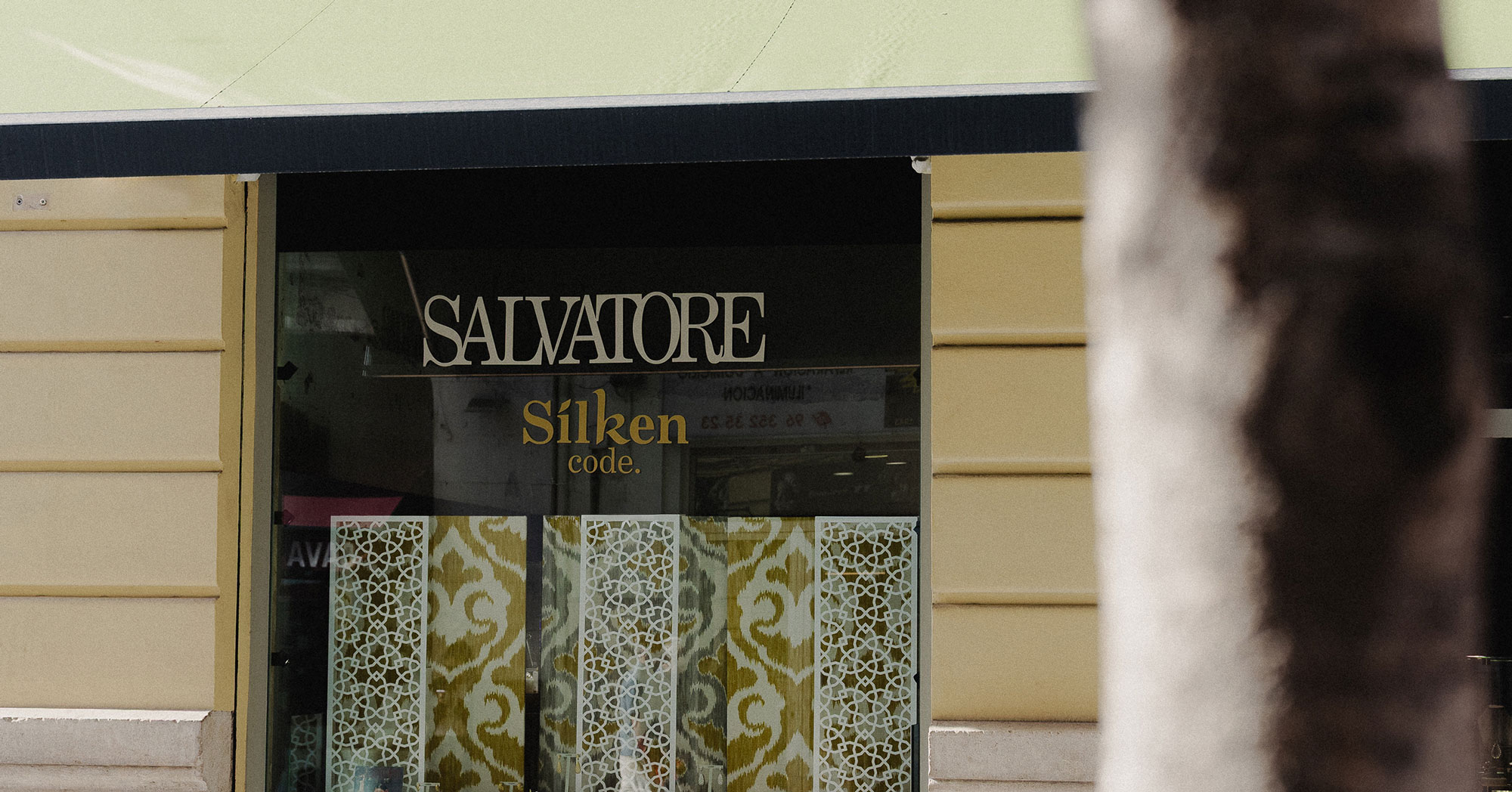
In the case of Salvatore Plata, this proposition is complemented by point-of-sale support materials — such as jewellery stands and graphic elements — that help reinforce the display and brand image.
If you would like to incorporate collections and resources designed to stand out in your shop window, you can request information about becoming a Salvatore Plata distributor through our contact form.